Paint sealant or wax: 5 situations that settle it before winter
Daniel von Detailing1 |


Dr. Wack "P21S"
P21S "Wheel Wax" Wheel Sealant 400 ml
Shine and protection for rims with an easy-to-clean effect


Dr. Wack "P21S"
P21S "Felgen-Detailer" Quick Detailer for Wheels 500 ml
Heat-Resistant Wheel Detailer with Strong Beading Effect
Dr. Wack "P21S"
P21S "Felgen-Detailer" Quick Detailer for Wheels 100 ml
Heat-Resistant Wheel Detailer with Strong Beading Effect
What does Dr. Wack's P21S wheel care line give you? Two products that kick in once the cleaning is done: a wheel wax as a long-term wheel sealant, and a wheel detailer for a quick refresh in between. Both cut down how much brake dust sticks and keep alloy and steel clean for longer.
A wheel sealant is a protective layer you lay onto the clean, dry wheel after cleaning, and it makes the surface smoother. Brake dust, tar and road salt get less to grip on, and the next wheel cleaner works faster. Dr. Wack's P21S line, made in Ingolstadt, covers this care step with two products: the wheel wax for lasting protection and the wheel detailer for quick upkeep in between.
Day-to-day from Detailing1: What we see a lot is a sealant going onto a wheel that's still warm or damp, and then drying patchy. After cleaning, the wheel has to be fully cooled down and dry, otherwise the wax won't bond evenly. If you want to seal straight after a motorway run, better to wait 20 to 30 minutes until the brake disc and the wheel barrel are back to hand-warm. In town a brake disc quickly climbs past 200 °C, and no wax lays down cleanly on something that hot.
Wheel care only starts once the wheel cleaner has done its job. That's exactly where the P21S line comes in: it protects the clean wheel instead of just cleaning it.
P21S is Dr. Wack's high-end line, and it made its name with the acid-free wheel cleaner that changes colour. The wheel care is the logical follow-on from that cleaning step. Get the wheel clean first with the acid-free Power Gel or the High End Felgenreiniger from the same line, then seal it, and you close the care loop inside one range. The wheel finish stays visibly cleaner for weeks.
The heart of any wheel care is surface tension. An untreated wheel has a rough, micro-porous structure where hot brake dust practically burns itself in. A wax layer smooths that structure out. The brake dust now only sits loosely on top and comes off at the next wash with far less pressure. The wheel wax delivers this effect as a lasting layer; the wheel detailer keeps it topped up in between.
One point that often gets missed: Dr. Wack thinks about wheel care across materials. The P21S products are cleared for painted alloy wheels, clear-coated wheels and steel wheels, not just one single wheel type. For most production cars that's the norm, because from the factory nearly all alloy wheels are clear-coated. Polished, unsealed wheels or chrome play by different rules — more on that below.
The season matters too. In winter, road salt and grit attack the wheel surface on top of everything else; in summer, hot brake dust burns in faster. A protective layer cuts both effects, because the dirt doesn't sit directly on the bare clear coat but on the smooth wax layer. Seal thoroughly once in autumn before the winter-tyre change and you'll get through the salty season with far less cleaning, while protecting the wheel's clear coat through the whole of the cold months.
The line is made up of two clearly separated products with different jobs. One is the base protection, the other is the upkeep in between.
The P21S wheel wax is the actual wheel sealant. It comes as a 400 ml tin and goes on thin with a pad or cloth onto the clean, dry and cool wheel, flashes off briefly, and is then buffed out. The wax layer protects alloy and steel wheels from brake abrasion and, depending on mileage and wash interval, holds through several washes. For cars that brake a lot in town and throw off plenty of brake dust, this base seal is the single biggest lever against baked-on wheels.
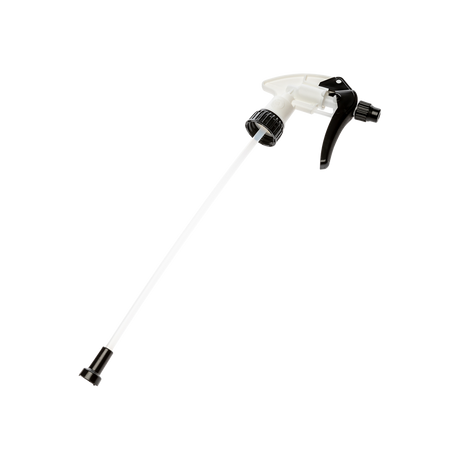
The P21S wheel detailer is the heat-resistant quick detailer for those exact same wheels. It comes as a 500 ml spray bottle and is meant for quick upkeep between two base seals. After a normal wheel wash you spray it on and pull it off with a microfibre cloth. That freshens the shine, tops up the worn protective film and takes only a few minutes per go. The detailer doesn't replace the wax — it stretches out how long it lasts.
The difference boils down to a simple formula: the wheel wax is the effort you put in two to four times a year, the wheel detailer is the quick move you make at every other wash. Both work towards the same smooth surface, just at a different rhythm and with a different lifespan.
The pack sizes fit that split too. The wax comes as a 400 ml tin, because you only need one to two grams of product per wheel, so a tin lasts two to three full seasons. The detailer comes as a 500 ml spray bottle, because it gets used more generously and more often. Keep both on the shelf and two containers cover your whole protection need after cleaning — no hopping back and forth between brands.
The choice between wax and detailer isn't about which product is better, it's about where you are in the care cycle. The two belong together.
The wheel wax is always right when the wheel has just been fully cleaned and needs protecting for longer. Typical moments are the seasonal wheel change in spring and autumn, a thorough deep-clean after winter, or the first care round on a car you've just bought. Here the extra effort pays off, because the fresh wax layer then fends off brake dust for many weeks. For four wheels, set aside around 30 to 45 minutes, depending on the wheel design and the number of spokes.
The wheel detailer is right when the base seal is already down and just needs a refresh. After every normal car wash, where the wheels get cleaned anyway, the detailer is on in five minutes. It also suits a quick tidy-up before an appointment, when the wheels are clean but could do with a bit more shine. Delicate multi-spoke wheels, where fully buffing out the wax is a fiddle, benefit especially from the sprayable detailer.
Day-to-day, most people combine the two into a fixed rhythm. Twice a year the wheel wax as base protection at the wheel change, and the wheel detailer as a refresh in between when needed. That keeps the effort low and the protection consistently high, without having to re-seal the wheel from scratch every time.
One practical special case is high-mileage drivers with a heavy brake load, say city-taxi use or cars with a sporty brake setup. Here the brakes throw off so much dust that the base layer wears down faster. In those cases the detailer earns its keep not every other wash but at every wash, and the wax rhythm shifts from twice to three or four times a year. The line is flexible enough to cover both extremes, from the low-mileage driver to the all-day user.
Every wheel care job stands or falls on the prep. No protective layer holds on a dirty or warm wheel.
Step one is always a thorough clean with a wheel cleaner, ideally the acid-free P21S Power Gel from the same line. The wheel has to be free of brake dust, tar and old care residue. Then rinse thoroughly with clean water and let it dry completely. Leftover moisture in the gaps between the spokes is the most common reason for patchy results. To play it safe, run a dry microfibre cloth over every spoke.
Step two is putting the wheel wax on. Put a small amount on an applicator pad and spread it thin and even over the wheel barrel, the spokes and the wheel face. The thin layer matters: too much product is harder to buff out later and gives no better protection. After a short flash-off time, where the wax hazes over slightly, buff it out with a clean, dry microfibre cloth until the surface shines. With the detailer's spray bottle there's no pad: spray on and pull off straight away.
Step three is the patience afterwards. A fresh seal needs a bit of time to cross-link before it's fully up to the job. Best to leave the car standing for about 2 hours after sealing and not run it through the car wash in that time. If you use the detailer you don't have that wait, because it works on the layer that's already there. That's exactly what makes it the handy solution for in between, and it saves around 10 minutes at the weekly wash every time versus a full re-seal.
P21S wheel care plays solidly in the midfield, with one outlier upward. Honestly placed, it's neither the cheapest nor the priciest system on the market.
Against pure spray sealants from other makers, the wheel wax has the advantage of classic wax lifespan and the cross-material clearance for alloy and steel. Against multi-year ceramic coatings for wheels, like specialist brands offer, the P21S seal holds for less time, but goes on without specialist know-how and without a long curing time. That's the line's deliberate trade-off: manageable effort instead of maximum lifespan. For the bulk of everyday cars, that's the right balance.
Dr. Wack's real strength is predictability. The formulas have been stable for years, made in Germany in Ingolstadt, and the wheel wax behaves today just like it did three years ago. If you're after a system that simply works and springs no surprises, you're better off here than with constantly changing trend products. The line deliberately steers clear of promises it can't keep.
The clear limit: for no-compromise paint correction on the wheel or for multi-year ceramic seals, P21S isn't built. Polished, unsealed alloy wheels and chrome need their own material-specific care products — a specialist metal polish is the right way here. For clear-coated production wheels, i.e. the normal case, the P21S wheel care covers protection after cleaning completely.
If you're starting out with P21S wheel care, you start with the wheel wax. It's the foundation everything else builds on.
For the first round, the wheel wax in the 400 ml tin is enough. One tin covers plenty of applications depending on wheel size, because each wheel only needs a thin layer. With it you lay the base protection on all four wheels and, after the first season, you notice the difference when cleaning: the brake dust comes off more easily, and the wheel looks cared-for for longer. That's the moment the effort of sealing makes itself felt.
The wheel detailer is the sensible add-on in step two. Once the base seal is down, you keep it topped up between washes with the 500 ml spray bottle, without having to buff out from scratch each time. Use both products together and you've got the whole care step after cleaning covered, and you'll barely have to think about your wheels for a long time.
You'll find both products bundled in this wheel-care category. If you want to line up the right cleaning product first, take a look at the P21S overview with the acid-free wheel cleaners. And if you want to get to know Dr. Wack beyond the wheel, the Dr. Wack range has the right lines for car, motorbike and glass from one source. That way you build yourself a continuous care routine out of predictable, material-appropriate products that suit your car.
Too much choice in Wheel Sealant & Detailer from Dr. Wack "P21S"? Get help picking:
Add Detailing1 as a preferred source on Google
Daniel von Detailing1 |

Daniel von Detailing1 |

Daniel von Detailing1 |

Daniel von Detailing1 |

Daniel von Detailing1 |

Daniel von Detailing1 |

Daniel von Detailing1 |

Daniel von Detailing1 |

Jasper von Detailing1 |

Daniel von Detailing1 |

Daniel von Detailing1 |

Jasper von Detailing1 |