

Cleaning an Alcantara steering wheel: grippy again, not greasy
Daniel von Detailing1 |


CarPro
"Essence Plus" Ceramic Coating Conditioner
Unique formula for maximum performance
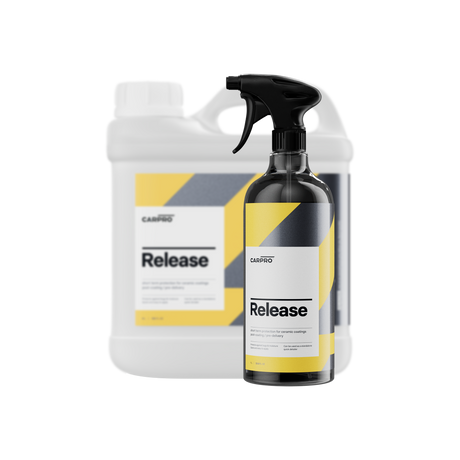


CarPro
"Release" Post-Coating Protection for Ceramic Coatings & Quick Detailer
Fast Protection for Ceramic Coatings


CarPro
Car Care Starter Kit with Carrying Case and Premium Care Products
What is coating care? Everything an existing ceramic coating needs once it's been applied: protection in the first few hours, a maintenance wash, removing build-up and, when needed, a sprayed-on sacrificial layer. It maintains and refreshes a coating. It doesn't replace a coating that's missing or has been polished off.
Coating care is the maintenance of an existing ceramic coating, often just called a coating: everything that comes after application. If you want to maintain a ceramic coating, you have four separate jobs: protect the fresh layer in the first few hours, give it maintenance washes, regularly remove build-up such as fallout and limescale, and only then, if needed, refresh it with a topper. Cleaning and protecting are two different steps, and each needs its own product.
Detailing1's tip from the shop: When water stops beading on your coating, don't reach for the topper first. Several expert sources put the effect down to build-up in most cases, not worn-off ceramic: traffic film, iron particles and limescale clog the surface. A topper on that build-up only hides the state of the layer underneath. That's why cleaning comes before any verdict.
Coating care assumes there's already a ceramic coating in place: it maintains and refreshes a layer that's already on the paint, and it doesn't build a new base coating.
That line sounds obvious, and it still gets mixed up. We had an enquiry where a reactivation shampoo was already planned in for a full paint rebuild before any coating was even on it. The shampoo would have found nothing there to reactivate. As long as there's no ceramic on the car, the route goes through Paint sealants and choosing a coating, not through maintenance.
Within maintenance, manufacturers keep two functions cleanly apart. GYEON describes its maintenance shampoo RestartWash in exactly these terms: it removes traffic film and embedded iron particles and restores the coating's performance without laying down any protection itself. So cleaning adds nothing, and a topper cleans nothing. Mix the two up and you either wash too aggressively or top over dirt.
How well the layer holds up is largely decided before maintenance: in the paint prep and the application. What counts there is covered in our guide Keramikversiegelung fürs Auto: was sie hält und was sie konserviert. This page picks up afterwards, with the finished, coated car.
Interest in the topic is steady. According to Ahrefs, search volume for ceramic coating in Germany today is about 7 per cent above where it was five years ago, and it peaks every year between April and June. If you get your car coated in spring, summer is your first care season: bugs, bird droppings, sun on dark paint.
Coating care splits into four jobs: protecting the fresh layer, maintenance washing, removing build-up and, when needed, refreshing a sacrificial layer. Each has its own type of product.
Post-coating protection belongs in the first few hours after coating. A fresh ceramic layer is still curing and is more sensitive at this stage than later on. The protection only goes on for this transition period and is no substitute for maintenance later.
The maintenance wash is the second job. For coated cars there are shampoos that clean gently. The full shampoo range is in the Car shampoo collection.
The third job is removing build-up that bonds to the layer. For that, there are maintenance shampoos that specifically lift residues out of the coating. Koch-Chemie Reactivation Shampoo "Rs" is acidic and dissolves limescale and salts that cover the protective film. Iron particles come off with an iron remover.
Toppers, also called boosters, handle the fourth job. They're sprays containing silicon dioxide, SiO2 for short, the compound of silicon and oxygen that classic ceramic coatings are built on. They lay down a thin sacrificial layer on the coating, meaning a layer that wears away in its place. For you, that means washes and weather take off the topper first and only then the base layer. GYEON Q²M Cure (REDEFINED) is one of these toppers, made for refreshing existing coatings. More sprays of this type are in the Ceramic spray sealants collection.
Lighter than a topper are the SiO2 detailers for a quick wipe-down between two washes, such as the GYEON Q²M CeramicDetailer. It's expressly not a coating replacement, just a quick refresh. You'll find all detailers of this type under Ceramic detailers.
Aged coatings are a case of their own. For those there are conditioners, SiO2 coatings without abrasives that go on with a soft pad and no pressure. They visually fill fine wash marring and bring the gloss back, but they don't remove the scratches. A top coat, on the other hand, is a separate top layer with its own cure time, found under Top coats for ceramic coatings.
How you should maintain a ceramic coating is set first by the maker of that coating. Their requirements on products, intervals and servicing take priority over general tips.
That's more than a formality. GYEON shows how closely manufacturers tie care and coating together: the warranty depends on a service appointment, and for ongoing care the maintenance plan names its own products, from shampoo to spray sealant. Use a different care product without checking and you're outside those requirements. With a coating from a detailer, the detailer is therefore your first point of contact, ahead of any data sheet.
The second criterion is chemistry. The pH value describes how acidic or alkaline a product is, with 7 counting as neutral. For Cure, GYEON gives a resistance range between pH 4 and pH 9. In plain terms: a strongly alkaline pre-wash cleaner sits outside what the maker of this coating promises. The question of whether a strong all-purpose cleaner can go on ceramic reaches us too, and the answer is in your coating's paperwork.
Manufacturers draw the lines in different places. Koch-Chemie deliberately makes "Rs" acidic so it lifts limescale out of the coating. In its maintenance plan, GYEON advises against treating contamination such as bird droppings with acids, alkalis or corrosive products, while also counting regular chemical decontamination as part of the care. Both fit together, as long as you stick to the requirements of the layer that's actually on your paint.
Matte paint is a case of its own. Only products expressly approved for matte surfaces belong on it, which is why GYEON offers Cure in a separate matte version. With wax, too, it pays to look at the purpose rather than the ingredient: guides advise against wax on ceramic, yet CarPro builds Release itself on a wax base, expressly for fresh coatings. The yardstick is whether a product is made for your coating.
When the beading drops off, the wash comes first, then decontamination of iron and limescale, then the water test. Only that result decides whether you need a topper.
This order protects you from two mistakes: giving up on a layer that's still working, or topping over build-up. The wash itself follows the coating maker's rules. GYEON calls for a cool car, no direct sun while washing and drying, and no automatic car wash. You'll find hand-wash technique with the Car shampoos; here, what counts is where it sits in the process.
Decontamination means chemically dissolving whatever has bonded to the layer: iron particles from brake dust, visible as fallout, and limescale from hard water. In plain terms: you strip off the film that makes the surface look dull. You'll notice it when water sits in round droplets again afterwards, provided the layer underneath is intact. GYEON specifies an iron remover on cool, damp paint that mustn't dry on, and names decontamination expressly as the way to bring back the initial water repellency.
After that, dry the car without pressure and check it. A good splash of water over the bonnet or roof is enough. Beading means the water sits in round, clearly defined beads. Sheeting means it pulls together into a film and runs off. Both show a working coating. Then you don't need a topper to refresh it, just the maintenance product your coating maker's plan specifies.
If wide wet patches stay put and the coating is still well within its lifespan, refreshing is the next step. If it's nearing the end of its lifespan, only the test without a topper shows whether there's still ceramic doing the work.
How often you should maintain and decontaminate a ceramic coating depends on how you use the car. The GYEON rhythm above is one manufacturer's yardstick; retailer guides give other intervals depending on use. A daily driver parked on the street picks up build-up faster than a weekend car. The first round with decontamination takes noticeably longer than a normal wash; that's part of it. The maintenance wash itself belongs on a wash bay with an oil separator or in a self-service wash bay.
This collection holds post-coating protection for freshly coated cars. Washes, detailers, toppers and top coats for ongoing care are in the linked neighbouring collections.
Every coating needs time before water, bugs and bird droppings stop leaving marks. If you can't leave the car standing overnight, protect the layer during this phase. CarPro expressly names detailers with a full diary and anyone who doesn't want to wait after coating as the target group.
CarPro "Release" Post-Coating Protection is made for exactly this. According to CarPro, you spray it on no earlier than 4 hours after coating or after infrared curing, spread it with a microfibre towel and buff with a second towel. No dilution needed. It protects short-term against moisture and bugs, so the freshly coated car can go outside sooner.
The limit is part of the deal: Release is short-lived. According to CarPro retailers, the first shampoo wash already takes most of it off, and CarPro itself gives no durability figure. So don't count on months of protection. On unsealed paint, glass and chrome, you can also use it as a regular quick detailer; everything on detailer technique is under Quick detailer.
Once it has cured, washes, detailers and toppers from the neighbouring collections take over. If you want to put a separate top layer on a suitable base or hybrid coating, you'll find it with the INNOVACAR "SINH" Top Coat. According to INNOVACAR, it goes on prepared paint and, like any coating, needs time to cure. The full paint care range, from wash to gloss, is under Paint care.
Care products maintain and extend an intact ceramic coating. No care product brings back scratches in the clear coat, deeply etched water spots or a worn-off layer.
The decision follows your situation. If the car has just been coated, a post-coating protection covers the first few hours. If the coating is working, the maintenance wash and the care product your coating maker specifies are enough. If the beading drops off, decontamination and the water test come before any topper. If an older coating looks dull and shows fine wash marring, a conditioner without abrasives brings the gloss back.
Swirls on a coated car usually sit in the clear coat under the ceramic. A care product can fill them visually; only a polish can remove them, and that takes the coating off with it. After that, a new application is due, and the range for that is in the Ceramic coatings collection. It's similar with limescale: spots that have etched in deep can sometimes only be polished out. Regular care prevents them, but it can't always fix them.
Maintaining a ceramic coating therefore also means being honest about the effort. The layer makes every wash easier and asks for a plan in return: washes according to use, decontamination at intervals, care product as specified. If you don't want to stick to that plan, a simpler sealant that you reapply every few months will often serve you better.
A tip from the detailing scene that isn't in any of the care plans we looked at: if you top constantly, you won't see the end of your coating coming. The topper masks whether the base layer underneath is still alive. So leave it off once, a few months before the expected end of the lifespan, wash with decontamination and then check with water. If it still beads now, the ceramic itself is doing the work. If the surface stays wet, the next ceramic coating is due before the clear coat shows you.
Too much choice in Coating care? Get help picking:
Add Detailing1 as a preferred source on GoogleYou maintain a ceramic coating with a plan that fits your usage: wash gently, regularly remove deposits like iron and limescale chemically, and apply a maintenance product according to the coating manufacturer's instructions. For GYEON, for example, this means using a maintenance product at least once a month and performing a decontamination every 3 months. You can find suitable shampoos under Car Shampoo.
Based on usage, not the calendar. GYEON recommends washing their coatings every 2 weeks or every 1,000 kilometers, while commercial guides suggest different intervals depending on the vehicle. The benchmark is to remove deposits before they set in. Wash the vehicle when it is cool and out of direct sunlight; according to GYEON, do not use an automatic car wash.
There is no general figure: durability is a specification provided by the respective coating manufacturer and assumes that their maintenance guidelines are followed. It can be extended with gentle washing, regular decontamination, and a topper as a sacrificial layer. GYEON also ties the warranty to a service every 24 months. You can compare coatings in the Ceramic Coatings collection.
Often, it is not. Multiple professional sources attribute diminishing beading primarily to deposits: road film, iron particles, and limescale cover the layer. Only after a wash and decontamination will a water test show whether the ceramic is still working. If the water remains flat on the surface, a topper like GYEON Q²M Cure (REDEFINED) is worth using within the expected durability period; near the end of its life, a new coating is generally preferred.
Topper and booster mean the same thing: an SiO2 spray that sits as a thin sacrificial layer on the coating, which is sprayed on and buffed off, wearing down before the base layer. A top coat, on the other hand, is a distinct top layer applied over a dedicated base or hybrid layer, which must cure just like a coating. You can see the selection under Top Coats for Ceramic Coatings.
With a post-coating protection product like CarPro "Release" Post-Coating Protection: sprayed on at least 4 hours after coating, it provides short-term protection against moisture and insects. The first shampoo wash largely removes it. All other details are determined by the manufacturer of your coating regarding curing time; for example, GYEON advises against using aggressive chemicals for the first 14 days.
Daniel von Detailing1 |

Daniel von Detailing1 |

Daniel von Detailing1 |

Daniel von Detailing1 |

Daniel von Detailing1 |

Daniel von Detailing1 |

Daniel von Detailing1 |

Daniel von Detailing1 |

Daniel von Detailing1 |

Daniel von Detailing1 |

Daniel von Detailing1 |

Daniel von Detailing1 |